


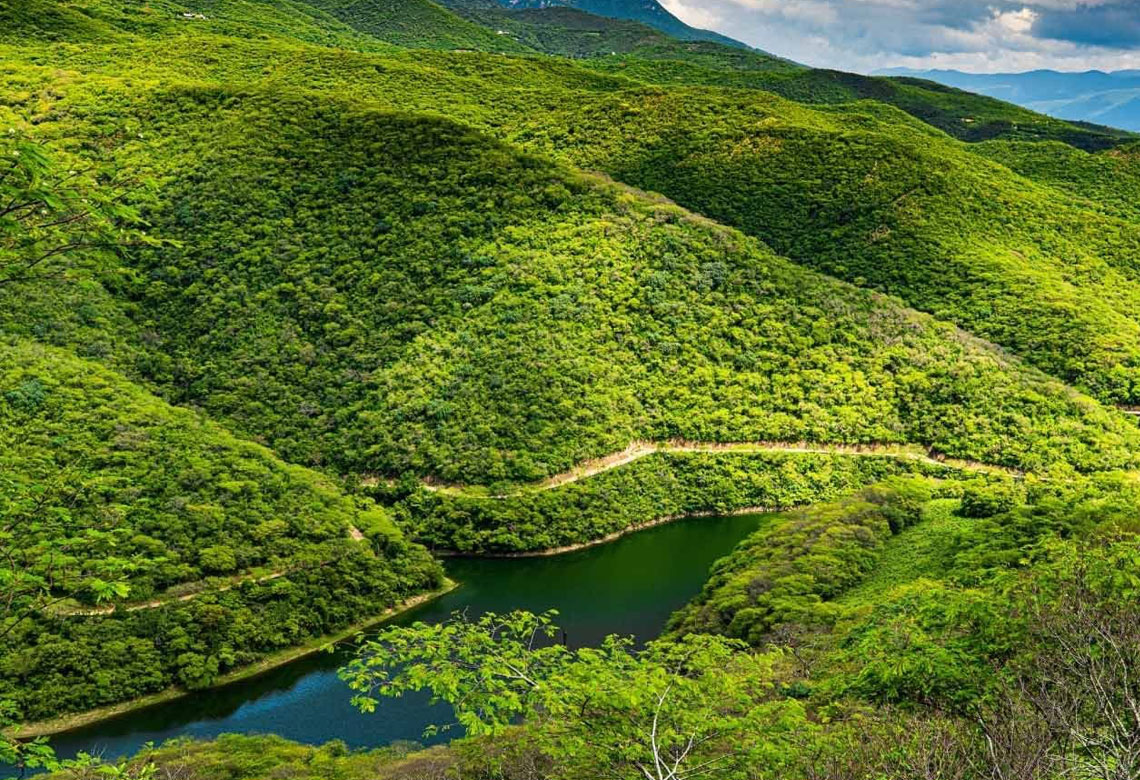
In the rugged northern highlands of Querétaro, the Sierra Gorda Biosphere Reserve has long stood as a quiet testament to Mexico’s ecological wealth. Now, it is being thrust into the international spotlight. A recent designation by national tourism authorities, supported by Querétaro’s own strategic campaign, has positioned Sierra Gorda as a flagship destination for sustainable tourism—an effort that blends environmental stewardship with local economic aspirations.
Spanning more than 380,000 hectares across five municipalities, the reserve is one of the country’s most biologically diverse areas. Its terrain shifts dramatically from pine-oak forests and cloud-covered mountains to semi-desert valleys and lowland jungle. The region harbors over 2,300 plant species and more than 130 species of mammals, many endemic. But beyond its biodiversity, Sierra Gorda has also become a proving ground for community-led conservation, shaped by civil society efforts dating back to the 1980s.
Querétaro’s tourism authorities, in coordination with the federal Secretariat of Tourism (SECTUR), are now leveraging this legacy. Their strategy includes forging partnerships with international tour operators and launching digital campaigns aimed at ecologically conscious travelers in Europe and North America. The goal is not mass tourism but a curated model of low-impact visitation—one that supports local agroecological practices and cultural preservation while respecting ecological thresholds.
The success of Sierra Gorda’s tourism pivot may hinge not on numbers, but on how visitors engage with its ecological and cultural fabric.
This shift aligns with broader national efforts to decentralize tourism away from Mexico’s coastal resorts and toward inland regions rich in natural and cultural capital. For Querétaro, Sierra Gorda offers a chance to redefine its place on the tourism map—not as a mass-market destination, but as a laboratory for sustainable regional development. The reserve’s UNESCO designation from 2001 lends it international credibility, while its longstanding grassroots conservation ethos offers a foundation for inclusive growth.


Yet the path forward is fraught with tension. Increased visibility may bring economic opportunity to remote communities, but it also raises questions about infrastructure capacity and environmental oversight. Many of the villages within the reserve lack robust services or transport links. Without careful planning, even well-intentioned ecotourism could strain fragile ecosystems or disrupt traditional livelihoods.
Balancing these competing demands—conservation, development, and visitor interest—remains a central challenge. While local authorities emphasize sustainability, the success of their initiative will depend on long-term governance and community participation. As global travelers seek destinations that reflect environmental values, Sierra Gorda’s future may hinge not on how many come, but how they engage with the land and its stewards.


