


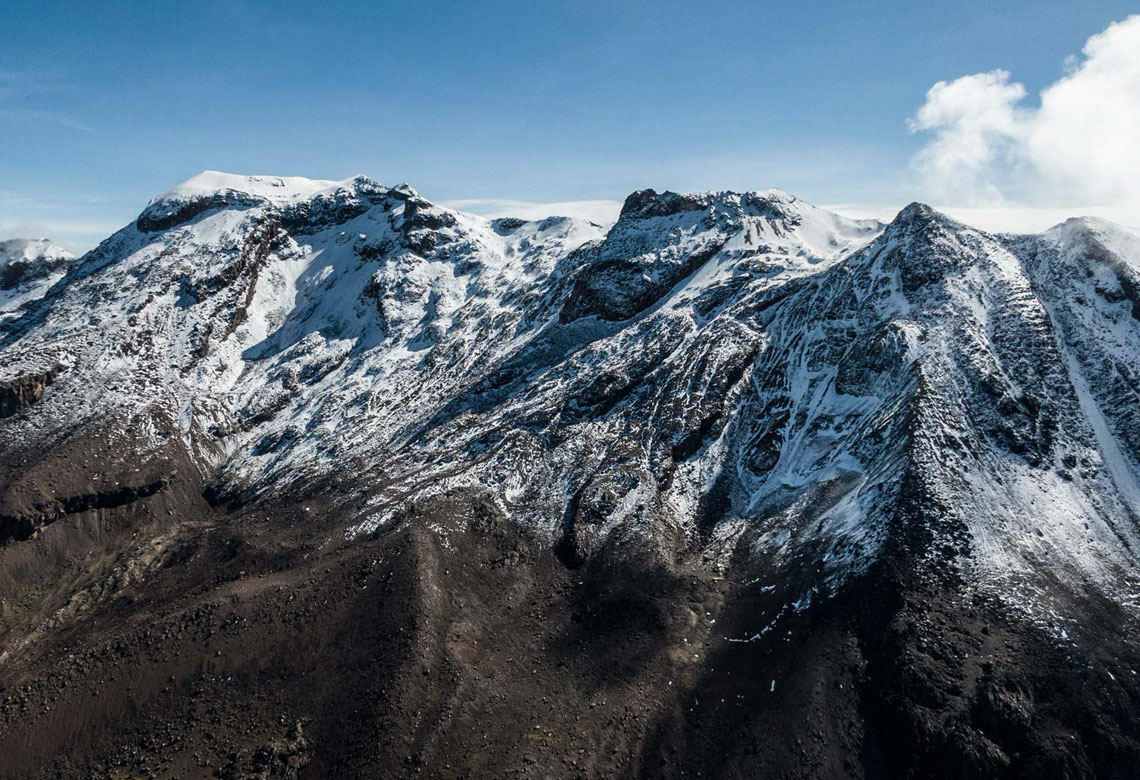
High above central Mexico, the last remnants of ice cling to volcanic slopes that once bore the weight of ancient glaciers. On peaks such as Pico de Orizaba and Iztaccíhuatl, what remains is both fragile and fleeting. According to recent assessments by UNESCO and national environmental agencies, Mexico has lost nearly 80% of its glacier coverage over the past century. The remaining ice masses—perched above 4,500 meters—are unlikely to survive beyond the next two decades.
While the scale of Mexico’s glaciers has never rivaled that of the Andes or Himalayas, their disappearance carries consequences beyond hydrology. These high-altitude ice fields contribute to local water cycles, particularly during dry seasons, and support unique alpine ecosystems. Their retreat signals broader climate vulnerabilities in mountainous regions where biodiversity and rural livelihoods are closely intertwined.
The cultural resonance of these glaciers runs deep. For many Indigenous communities, snow-capped volcanoes are not merely geographic features but sacred entities embedded in cosmology and ritual. Myths surrounding Iztaccíhuatl and Pico de Orizaba have long shaped local identities and national symbolism. As the ice vanishes, so too does a visual language of permanence—white summits that once stood as metaphors for endurance and transcendence.
The loss is not merely physical but emblematic—a measure of how climate change reshapes meaning as well as terrain.
Tourism, too, is undergoing a quiet transformation. Climbers, photographers, and pilgrims once drawn to the spectacle of snow-draped peaks now encounter a starker landscape. The diminished aesthetic appeal has begun to affect visitor numbers, with local economies feeling the impact. Communities near glaciated areas face growing uncertainty as adventure tourism contracts and traditional water sources become less reliable.


Some conservationists have called for symbolic protective status for the remaining glaciers—not as a means of physical preservation, which is largely unfeasible, but as a gesture of cultural and ecological recognition. Others suggest that tourism can adapt by shifting focus from ice to other highland assets: volcanic geology, endemic flora, or storytelling traditions rooted in mountain lore. Such pivots may offer partial resilience but require coordinated investment and narrative reframing.
Critics argue that given their limited size, Mexico’s glaciers have never played a critical role in national water supply. Yet this perspective risks overlooking their layered significance. The loss is not merely physical but emblematic—a measure of how climate change reshapes not just environments but also the meanings societies attach to them.
As the final patches of ice recede, they leave behind more than barren rock. They expose a need for cultural reckoning and adaptive strategy—one that acknowledges both the symbolic weight of natural heritage and the economic realities of mountain communities. In this sense, Mexico’s vanishing glaciers are less an end than a mirror: reflecting how nations might navigate identity, ecology, and tourism in an era of irreversible change.


